

The thought of a tainted egg sitting in a kitchen refrigerator days or weeks after a recall with no obvious indication that something is wrong is a bit confusing. No odor. No discoloration. It’s just a regular egg with a tiny stamped code that most people have never considered reading. In the wake of the nation’s worst salmonella outbreak in recent memory, Belgian health officials are essentially asking the public to confront that.
At least 306 individuals in Belgium have tested positive for salmonella linked to eggs made by Geel, Antwerp Province-based Laerco BV. Since contamination was initially discovered at the site back in late April, the Belgian Federal Agency for the Safety of the Food Chain, or FASFC, has been handling the situation. The agency’s spokesperson was open about the scope of it, pointing out that Belgium had never witnessed such a large cluster with so many confirmed cases. No one has passed away. In all of this, that is the only truly positive news.
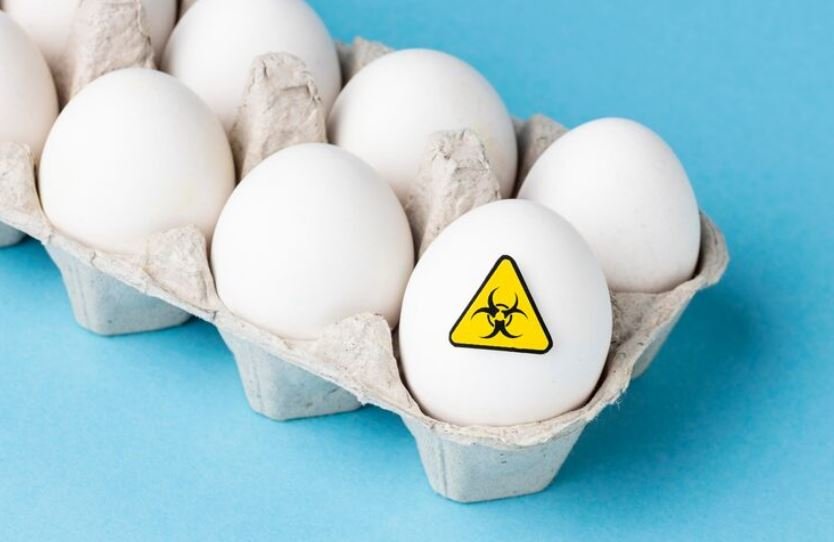
The way the outbreak changed following the initial intervention is what makes this timeline interesting. Authorities closed that area of the farm and issued a recall after salmonella was first discovered in one of the farm’s four henhouses in May. It appeared to be contained. However, subsequent testing showed the bacteria had spread to a second henhouse, and the case numbers did not match the expectations of public health officials.
This resulted in a second, more extensive recall on August 10, the farm’s complete closure, and the on-site poultry culling. It is estimated that up to 2 million eggs were distributed, reaching supermarkets in Belgium as well as Luxembourg. Notifications were also sent to the Netherlands, France, Italy, and Portugal.
Some of the most well-known supermarket chains in Belgium, such as Colruyt, Delhaize, Aldi, and Carrefour, sold the eggs. There is an uncomfortable intimacy to that detail for customers who frequently purchase groceries from those stores. These weren’t niche goods from an unidentified vendor. They were the kind of eggs that someone might pick up on a Tuesday afternoon without thinking about it.
Health officials have taken care to point out that 306 is most likely an undercount. Many people who get salmonellosis, especially those who are otherwise healthy, never see a doctor despite the illness’s many symptoms, which include fever, cramping in the stomach, vomiting, and diarrhea. They recover without a formal diagnosis after experiencing hardship for a few days. Pregnant women, the elderly, and young children are the groups most vulnerable to serious illness. For them, something that others might consider a minor annoyance can turn into a real threat.
All eggs sold in the European Union must have the four stamp codes 2-BE-1073-01, 2-BE-1073-02, 2-BE-1073-03, and 2-BE-1073-04 printed directly on the shell. Anyone who bought eggs before August 10 is advised by Belgium’s food safety authority to check those codes and return any impacted cartons to the store rather than using them. While cooking the eggs completely lowers the risk of illness, using raw or lightly cooked preparations, such as a soft-boiled egg or homemade mayonnaise, puts this batch at serious risk.
It’s important to take a step back from the details and acknowledge what this outbreak shows about the general mechanisms of food contamination. A processing facility that handled thousands of products was not the source in this case.
Before anyone realized the full scope of the problem, bacteria from an animal’s stomach surreptitiously entered the food supply on a single farm in Flanders over the course of several weeks. For times like these, Europe’s egg traceability system—that little stamped code—is in place. It serves as a reminder that when people know where to look, the infrastructure performs better.
