
A pantry staple turning into a health issue is strangely unsettling. Of all things, rice. For months or even years, it remains unremarkable in the cabinet until it isn’t. Millions of Americans are currently in a similar situation as a result of the FDA’s updated recall notice for Lundberg Family Farms Organic White Jasmine Rice, which was discreetly and regularly sold at some of the nation’s largest retailers in late August.
In and of itself, the recall is not new. In April 2026, Wegmans first recalled the product after Lundberg voluntarily reported that some packages might contain foreign material. It received little attention at the time. However, the FDA greatly broadened the scope this week, finding 27,324 two-pound packages that were dispersed throughout 12 states and contained more than 54,000 pounds of rice. That is no longer a minor footnote.
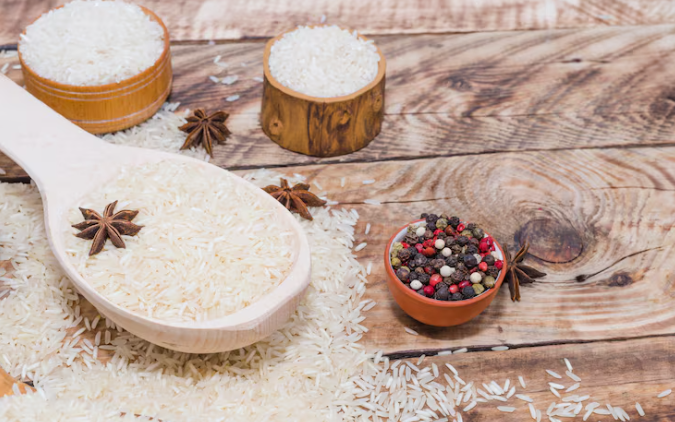
The impacted bags have lot numbers 260201MA and 260202MA, UPC code 073416040281, and best-before dates of February 1 and February 2, 2027. Wegmans, Target, Walmart, Giant, and Hy-Vee sold them in states ranging from Florida to Washington and from California to Connecticut. This is the exact recall that goes unnoticed if you’re the type of person who purchases a bag of rice and then forgets about it, which is the majority of people. The dates appear to be in order. The bag appears to be fine. Until you know to look for one, nothing indicates a problem.
The ambiguity surrounding the actual contamination is what makes this situation a little annoying. According to the FDA, this is a Class II recall, which means that exposure may result in transient or medically treatable health issues, with major repercussions deemed unlikely. That’s a little comforting. However, the agency hasn’t stated what foreign material might be there. Stones, pieces of metal, wood, or plastic are common culprits in rice processing; nobody wants any of these things near a dinner plate. Even though it doesn’t always point to a cover-up, the lack of details doesn’t inspire much confidence.
Most people consider Lundberg Family Farms to be a reputable brand. The California-based business, which operates under the name Wehah Farms, has spent decades establishing a reputation for producing organic, carefully sourced grain products. A recall of this magnitude raises legitimate concerns about where quality control failed during this specific production run, but it does not erase that history. The fact that two different lot numbers are impacted indicates that this wasn’t a singular occurrence on a single manufacturing day.
Particularly in the South, rice is not an afterthought. Beans and rice, chicken and rice, hoppin’ john, and dirty rice are all staples of everyday cooking. Families in Florida, North Carolina, and Tennessee may unintentionally be handling recalled goods when they reach for a common pantry staple during a typical weeknight supper. That’s the low-key, quiet reality of how food recalls truly impact day-to-day existence.
This is clear-cut practical advice. Examine the package. Locate the lot number and the UPC. Don’t eat it if the date and the number match. Get rid of it. Consumers should get in touch with the retailer where they bought it if they would like a refund or a replacement. There’s no need to panic. However, nobody should dismiss this either, especially since the best-before dates go into early 2027. Nothing about the impacted bags suggests otherwise, so there’s a good chance they’re still sitting in homes looking completely functional.
As the FDA continues its review, it is still unclear if more lot numbers will be added to the recall. Food recalls have experienced this in the past; what begins as a contained pull grows as new information becomes available. For the time being, the advice is straightforward: read the label and let go if you’re unsure. The uncertainty is not worth a two-pound bag of rice.
