
When the water around which a coastal community has built its identity begins to send the wrong signals, a certain kind of unease descends. That unease has been slowly growing on the Sunshine Coast. The area’s beaches, canals, and creeks—the kinds of waterways people jog alongside in the morning and let their children wade through after school—are now at the center of an expanding environmental concern that locals and officials can no longer ignore.
One of the most urgent risks to the health of the waterways in the area is industrial stormwater runoff. Rain collects anything that is on urban and industrial land, including chemicals, heavy metals, oils, and sediment, and carries it directly into the drainage system. There are more than 1,500 kilometers of subterranean stormwater pipes along the Sunshine Coast, all of which eventually feed into beaches or waterways. Very little of the contamination is filtered during its lengthy journey.
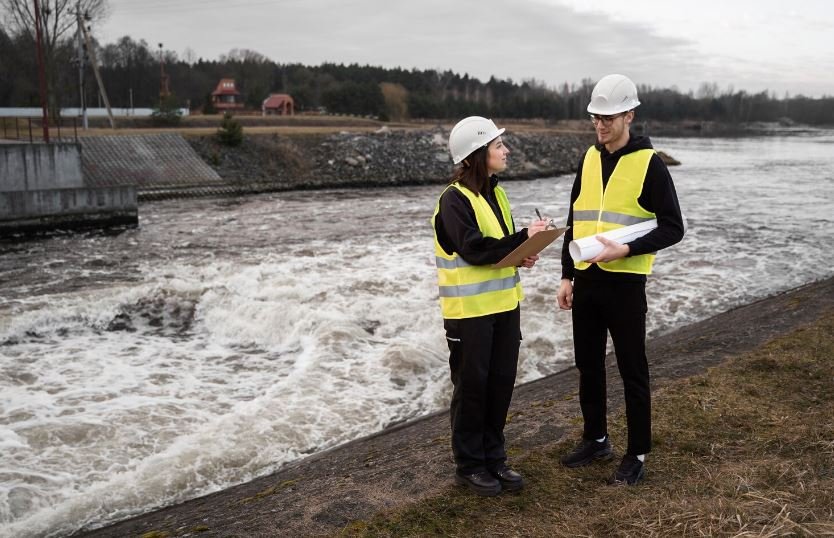
The extent of the damage is still unknown. However, community organizations and environmental observers are beginning to believe that the rate of regional development has simply outpaced the infrastructure and laws intended to mitigate its negative effects. For many years, one of Queensland’s fastest-growing areas has been the Sunshine Coast. More industrial activity, more sealed surfaces, more construction, and more runoff that carries the residue of all of this into areas where families swim and fish spawn.
In 2022, Sunshine Coast Council established a water protection taskforce, a minor but significant indication that the issue was acknowledged on an official level. Officers were specifically assigned to keep an eye on and react to pollution incidents in nearby waterways. Officials have not provided a clear response to the question of whether that taskforce has had enough resources and reach to keep up with the scope of the issue.
Adopted in 2021, the council’s stormwater management strategy outlined an ambitious framework that included improved runoff intercept, healthy waterways, and fewer pollutants. It appears on paper to be a serious document written by individuals who are aware of the risks. In reality, these things tend to subtly widen in the space between strategy and outcome. Early in 2026, the Queensland government introduced the Sunshine Coast Waterways Authority Bill, indicating that even at the state level, there was recognition that the previous oversight arrangements were inadequate.
The specificity of the issue is what sets this alert apart from previous alerts. This is about detectable contamination getting into waterways through industrial stormwater channels, not generalized concerns about the climate and rainfall. On average, the area receives 1,700 millimeters of rain annually. In a way, every major rainstorm serves as a stress test for any upstream pollution controls that may or may not be in place.
It’s difficult to ignore the color change in the water—a murkiness that wasn’t present the day before—when you’re standing close to one of the Sunshine Coast’s creek mouths following a significant downpour. The majority of drivers pass by it. Some people take pictures. Some people file complaints. However, the water continues to flow, passing the estuary and entering the ocean with its invisible load.
For a long time, the Sunshine Coast has marketed the excellence of its natural surroundings. Many people actually chose to live there because of its reputation, which is more than just a tourist attraction. Without proper accountability, watching that environment absorb the silent costs of industrial activity is the kind of thing that tends to accumulate gradually until it becomes unavoidable. In that regard, the high alert may be long overdue.
