

For eighteen hours, that jar has been steeping. A barista will filter it tomorrow morning, transfer it into a smaller container, label it with a date using masking tape, and store it in the refrigerator. How long it stays there, and what happens if it stays too long, is a subject a lot of cafes started taking more seriously only as health inspectors started asking.
The first flavor story to appear on coffee menus was cold brew. Easy. low acidity. strong enough to be consumed over ice without losing its potency. Because the math was straightforward—coarse grind, cold water, and time—baristas adored it. No pricey equipment, no technique to practice. The margins caught Chains’ attention. According to the National Coffee Association’s most recent report, past-day cold brew consumption increased by over 42% between 2020 and 2025. What scaled with it, virtually unseen, was a food safety designation that roasted coffee beans and strong espresso had never carried.
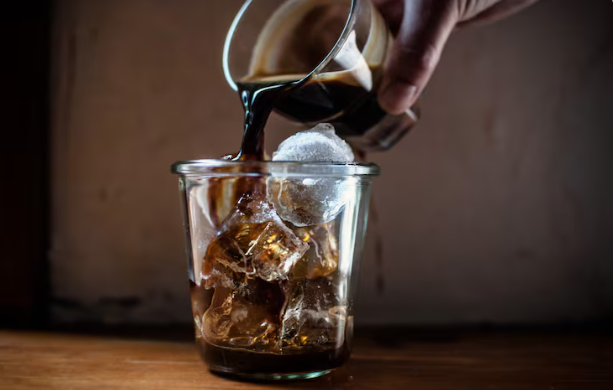
Health officials define cold brew as a Time/Temperature Control for Safety food – the same category as raw meat, cooked rice, and chopped leafy greens. The reasoning is simple: cold brew is a low-acidity drink made without heat, steeped for 12 to 24 hours at non-pasteurizing temperatures, and then kept for several days until the final cup is poured. A drip coffee maker has never been considered a food safety threat.
The operational tale is revealed by the shelf life figures. For seven to fourteen days, undiluted cold brew concentrate kept in a sealed container at or below 40°F is usually regarded as safe. When anything else enters the picture, that window quickly gets smaller. The safe window decreases to three to seven days when water is added to a ready-to-drink batch because dilution increases the water activity, which is essentially the moisture available for microbial growth, while maintaining a low acidity. A cafe is operating well outside of that window, potentially without realizing it, if it dilutes a huge batch on Monday morning and serves from it until Friday afternoon.
A research conducted by the Canadian Food Inspection Agency on 59 commercial cold brew samples revealed that 25% of them exceeded safe aerobic plate count levels, although no pathogens were discovered. That means that one in four commercial samples exhibit detectable microbial growth without any of the typical warning indicators, such as visible mildew, a noticeable change in odor, or a reason for a client to hesitate before consuming alcohol.
At better-run stores, the operational response has been systematic rather than panicky. Instead of large weekly steeps, use smaller daily batches. Every container must have a strict date on it, and even if the product appears to be in good condition, strict disposal deadlines must be followed. Concentrate and diluted ready-to-drink portions are stored separately; the latter is recorded differently due to its faster clock.
Some stores have switched to quick cold brew systems, which drastically shorten the steep period and shorten the time a batch is at danger before it is filtered, cooled, and served. For packaged and bottled cold brew offered through retail, high-pressure processing has emerged as the answer, extending shelf life without requiring heat treatment that would change the flavor characteristic that initially defined the category.
